

 Magyar
AI inference / GPU cluster
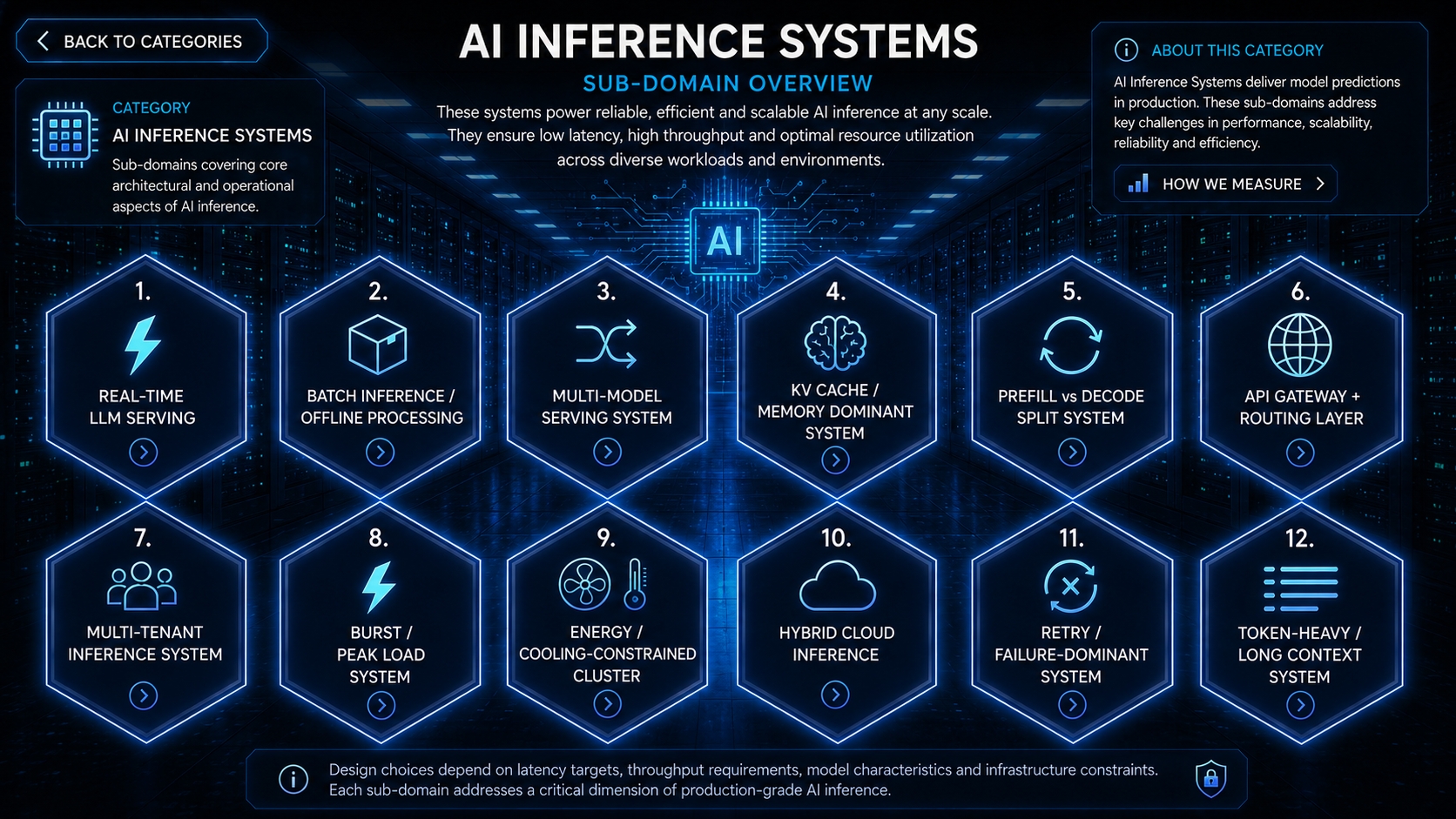
In modern AI inference environments, the greatest challenge is often no longer raw computational performance, but operational coordination itself.
Different models, GPU resources, data flows, cache layers, scheduler processes, and real-time workloads continuously interact within a dynamically changing operational environment.
In these systems, operational noise frequently appears in the form of:
- – unstable workload behavior
– burst-like load waves
– latency fluctuation
– queue congestion
– resource fragmentation
– downstream response degradation
– and difficult-to-detect coordination losses
AVA-Stabilis observer-only pilots do not analyze model content or training processes. Instead, we focus on the operational dynamics behind the infrastructure.
Our goal is: to reduce operational noise, support more stable inference behavior, and uncover hidden operational instabilities.
Our investigations may include the analysis of:
- – latency cascade patterns
– queue shockwave propagation
– workload synchronization issues
– inference burst dynamics
– scheduling instability
– hidden idle topology
– energy and operational resonance behavior
– as well as cluster-level coordination dynamics
Our pilots are conducted using an observer-only methodology read-only connectivity:
– minimal and controlled data requirements
– anonymized and aggregated operational signals
– no runtime intervention
– no workflow modification
– no service disruption risk
The anonymized investigation reports presented on this page represent observer-only operational-analysis pilots and modeled investigation examples created for various infrastructure and operational environments.
Their purpose is to help prospective partners understand: how AVA-Stabilis approaches complex operational-system analysis, what types of operational patterns and synchronization behaviors are investigated, and which operational-analysis and synchronization-modeling methodologies are exploredacross different real-world infrastructure environments.
The published materials are: anonymized, partially modeled, and demonstration-oriented operational-analysis examples designed to illustrate the research and analytical directions of the platform.
Pilot reports:
1. Real time LLM serving, PDF
2. Batch inference / offline processing, PDF
3. Multi-model serving system, PDF
4. KV cache / memory dominant system, PDF
5. Prefill vs. Decode split system, PDF
6. API gateway + routing layer, PDF
7. Multi-tenant inferense system, PDF
8. Burst / peak load system, PDF
9. Energy / cooling-constrained cluster, PDF
10. Hybrid cloud inference, PDF
11. Retry / failure-dominant system, PDF
12. Token-heavy / long context system, PDF