


AVA – Operational Intelligence
What Happens When Every System Works, Yet the Organization Remains Slow?
Most organizations already have ERP systems, BI reporting tools, Monitoring or Process Mining platforms, Process documentation, KPI dashboards and performance metrics.
Yet they still experience:
– increasing lead times,
– slower decision-making,
– operational bottlenecks,
– declining capacity utilization,
– and growing organizational friction,
even though every system appears to be functioning properly.
In many cases, the problem is not located within a single system. The problem emerges in the interactions between systems, processes, teams, and decision points.
AVA-Stabilis Does Not Replace Existing Systems
ERP systems show processes.
BI systems show numbers.
Monitoring or Process Mining systems show operational states.
AVA-Stabilis examines how the entire operational system behaves as a whole.
It is not another ERP. It is not another dashboard. It is not another monitoringor Process Mining tool.
It is an Operational Intelligence platform designed to reveal the hidden interactions that shape organizational performance.
We Do Not Only Ask “What Happened?”
We also ask:
– Why did it happen?
– Where did it originate?
– How does it propagate through the organization?
– What other areas does it affect?
– What business consequences does it create?
Because a significant portion of operational inefficiencies does not arise within individual systems.
It emerges between them.
What Does AVA-Stabilis Analyze?
We study how the following elements interact within a connected operational environment:
– business processes
– organizational units
– digital systems
– decision points
– resources
– human operating patterns
Our focus includes:
– observer-only operational analysis
– operational diagnostics
– synchronization pattern analysis
– bottleneck and capacity-loss detection
– identification of operational instabilities
– modeling the behavior of complex systems
What Is an Operational Map?
One of the most valuable outputs of AVA-Stabilis is the Operational Map. An Operational Map is a diagnostic model of how an organization actually operates.
It reveals:
– where bottlenecks emerge,
– where capacity is lost,
– how delays propagate,
– which processes influence one another,
– where coordination problems arise,
– and which areas represent the highest operational risks.
It is not another dashboard.
It is an executive-level map of how the organization truly functions.
What Do You Receive at the End of a Typical Pilot?
A typical AVA-Stabilis pilot delivers:
– an operational map of critical interaction points
– identification of hidden bottlenecks
– detection of capacity losses
– synchronization analysis across teams and systems
– visibility into operational risks
– prioritized improvement opportunities
– executive decision-support recommendations
The objective is not to create another report. The objective is to understand where and why operational effectiveness is being lost.
Observer-Only Approach
AVA-Stabilis operates using an observer-only methodology.
This means:
– read-only access
– minimal and controlled data requirements
– anonymized and aggregated operational traces
– no workflow modifications
– no operational intervention
– no service disruption risk
We do not control systems.
We do not alter operations.
We make invisible operational dynamics visible.
Who Can Benefit?
ERP Integrators
Identify operational relationships that extend beyond individual ERP modules. Create new value-added services for existing clients. Strengthen long-term customer relationships.
Consulting Firms
Accelerate diagnostics. Enable more focused workshops. Improve decision-preparation processes. Increase consulting capacity without increasing team size.
Large Enterprises
Reveal: hidden capacity losses, organizational bottlenecks, coordination issues, operational instabilities. All with minimal implementation risk.
Government and Public Sector Organizations
Improve visibility across complex digital ecosystems. Identify inter-organizational coordination challenges. Support decision-making in large-scale service environments.
Where Are We Today?
AVA-Stabilis is an operational platform currently being validated across multiple industries.
Pilot and reference models have been developed in:
– HPC and AI infrastructures
– Data center environments
– Logistics systems
– Manufacturing operations
– Financial services
– Organizational operating models
Our goal is not to introduce another software platform.
Our goal is to demonstrate that a significant portion of operational inefficiencies originates in the relationships between systems — and that these relationships can be measured, analyzed, and improved.
Who We Are
AVA-Stabilis is a Hungarian-developed Operational Intelligence initiative created by professionals with extensive experience in:
– enterprise systems
– digital operations
– infrastructure management
– organizational processes
– technology development
Our mission is to build a new layer of operational intelligence that helps organizations identify the hidden relationships and operational losses that traditional reporting and monitoring systems often fail to reveal.
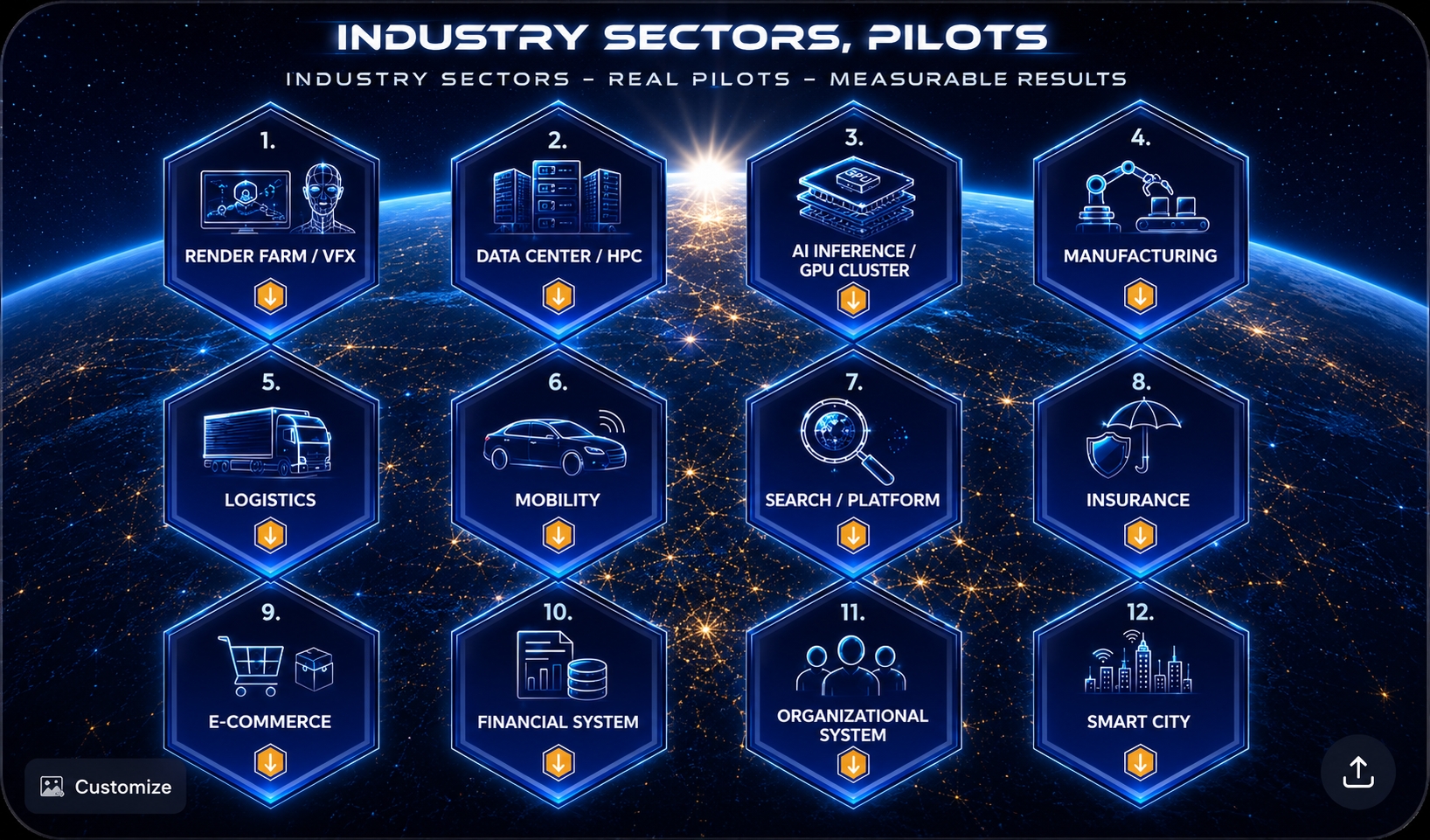
12 Industries. 142 Operational Domains. Pilot Programs.
Through observer-only operational analysis pilots across multiple industries, AVA-Stabilis examines how complex digital systems actually behave in real operational environments.
We are not trying to replace existing infrastructures.
We are not rebuilding operational systems.
And we are not creating autonomous decision-making platforms.
Our goal is far more practical: to make it easier to understand, where operations slow down, where bottlenecks emerge, where hidden capacity is lost, and how operational disturbances propagate through organizations and digital ecosystems.
Most modern analytics platforms provide dashboards, KPIs, reports, and statistics. These are important — but they often do not explain why a system gradually becomes unstable.
AVA-Stabilis does not simply monitor data.
It attempts to reconstruct operational behavior and structural patterns behind the visible metrics.
The purpose of the pilots is not to redesign systems, but to create a clearer operational understanding of complex environments.
Currently, we are modeling and analyzing 142 operational subdomains across 12 industries.
The published pilot materials represent operational-analysis and synchronization-modeling examples created for various infrastructure environments and research directions explored by the platform.
Click on the industries below to explore the related pilot programs and operational investigations.


Project Management

A Cognitive Decision-Support Development Ecosystem
Core Statement
Intelligence does not emerge in machines.
Intelligence emerges in humans when they see clearly and take responsibility for their decisions.
The systems we develop do not create artificial intelligence.
They form a cognitive infrastructure designed to support human decision-making.
We do not build autonomous decision-makers.
We do not transfer responsibility to machines.
The decision always remains human. So does accountability.
What We Mean by “AI” – and What We Do Not
The term Artificial Intelligence is widely used, but often misleading.
The systems we research and develop do not possess consciousness, intention or autonomy.
Their role is to:
- – process large volumes of information efficiently
- – identify patterns and relationships
- – structure alternatives and scenarios
- – support decisions without making them
Technology is not meant to replace human thinking, but to create space for clearer human presence and judgment.
The Human Role in the System
Technology is useful only when it does not stand in the way of the human.
Our goal is not to make systems “decide better”, but to enable people to:
- – work with less noise
- – reduce unnecessary decisions
- – act responsibly in clearer situations
True intelligence does not increase inside the system.
It becomes visible in the human once cognitive overload is removed.
AVA – A Conceptual and Architectural Model
AVA is not a conscious entity and not an autonomous intelligence.
AVA is a conceptual and architectural working model that supports:
- – the transparent design of complex systems
- – the clarification of roles between humans and technology
- – the structured development of decision-support architectures
The personification of AVA serves as a thinking and communication tool, not as the description of an independent intelligence.
A New Approach to Project Management
IARIP extends traditional R&D project management with a network-based development model built on cognitive decision support.
In this approach, projects:
- – do not evolve in isolation
- – develop through shared data and knowledge resonance
- – are continuously validated through feedback
The ecosystem connects:
- – research and development initiatives
- – financial and institutional stakeholders
- – technological and engineering implementation
The goal is not only successful individual projects, but responsible, sustainable development paths over the long term.
What We Do in Practice
The IARIP initiative develops an early research architecture aimed at stabilizing complex systems through pattern-based predictive modelling. The concepts presented on this website describe research directions and architectural frameworks rather than finished technologies. The methodology is currently under validation through pilot projects carried out in collaboration with research and industry partners.
The cognitive decision-support infrastructure assists every phase of the project lifecycle:
- – ideation and conceptual clarification
- – planning and resource optimization
- – implementation and validation
- – scaling and long-term operation
Through real-time analysis, pattern recognition, and forecasting, we support better human decisions — we do not replace them.
Closing Statement
We do not offer technology as a solution in itself, but as a clearer space for decision-making.
The tool stays in its place.
The human returns to the center.
Directions:



- You do not have to leave your country, you can work from home, we will cover your expenses (renting machinery, laboratory…)
- You can join in leading researches
- You can take part in several projects as a consultant
- You can be owner of different projects
IARIP provides:
- Participation in the most customized projects
- Organization of the needed research team for the projects
- Communication with other institutions involved in the research
- Communication with the investors
- You can develop your invention in a safe environment
- You should deal only with professional work
- You will be the owner of your invention
IARIP provides:
- Serious professional screening (expert control, risk analysis, implementation plan)
- Comprehensive management after endorsing the submission (joint venture establishment, financing, consulting, prototype manufacturing, product manufacturing, sales)
- Behind your investment, there are only novel and prospective start-ups
- IARIP focuses only on advanced researches and breakthrough ideas
- You can become a part-owner of not only one particular idea but also all of the start-ups which our Institute deals with
IARIP provides:
- Quest of masterminds
- Professional screening of the ideas
- Make innovative ideas into projects
- Project management
- Global research projects can be created through collaboration
- Solving common problems is more efficient and more smashing
- Joint training and internship programs
- More efficient use of the shared intellectual and material resources
IARIP provides:
- Compilation and management of research teams needed for the joint research areas
- Communication with the Institutions needed for the projects
- Communication with the investors
- Organisation of the necessary research and development
Digital Open University – AVA Learn
An open education model built on cognitive learning support infrastructure
The future of education is not primarily organized around subjects, but around individual learning patterns, developmental pace and processes of understanding.
The Digital Open University concept is embodied in AVA Learn:
- – a learning-support cognitive infrastructure
– that integrates pedagogical expertise, insights from cognitive science
– and digital decision-support tools.
The goal is not for technology to teach instead of humans, but to create the conditions for clearer, more conscious learning.
What AVA Learn does – and what it does not
AVA Learn is not an autonomous teacher and does not possess its own knowledge or intent.
Its role is to:
- – structurally follow learning processes,
- – identify learning patterns and challenges,
- – provide learning pathway recommendations,
- – support feedback and decision preparation for learners and educators.
All learning-related decisions — what to learn, when, and to what depth — remain with the human participants.
The learner’s role
Learners do not adapt to rigid curricula. The learning environment adapts to the learner.
AVA Learn supports learners in:
- – gaining clearer insight into their own learning processes,
- – recognizing strengths and blind spots,
- – taking conscious responsibility for their development.
True understanding does not emerge in the system, but in the learner — when the environment supports rather than obstructs learning.
Supporting educators and researchers
Educators and researchers are assisted by learning-support cognitive modules, including:
- – adaptive course and curriculum design,
- – structured mapping of knowledge and competencies,
- – transparent and interpretable feedback systems.
These tools do not replace pedagogical judgment, but support professional educational practice.
The three pillars of the open academic ecosystem
- Individual learning space
Each learner has a dynamically evolving learning profile that becomes more precise throughout the learning process. - Educator collaboration network
Educators operate within a shared methodological and content framework, where knowledge is more than information — it is understanding and context. - Integrated research and development
The anonymized analysis of learning data enables the development of responsible and transparent educational models.
Closing statement
AVA Learn is not an “intelligent teacher”, but a learning-support environment.
The technology remains in its place. Learning happens in the human.

AVA Film Studio and Reality 2.0 Media
Content that creates space for reflection
AVA Film Studio and Reality 2.0 Media represent a new approach to film and media creation.
In this model, films, series and educational content are not designed as one-way messages, but as experiential spaces that adapt to the viewer’s cognitive, emotional and thematic capacity.
The goal is not for technology to think on behalf of the viewer, but to support deeper engagement, insight and independent interpretation.
The role of technology in the creative process
The digital and generative tools used within AVA Film Studio operate as creative support infrastructure.
Their function is to:
– prepare and vary visual and narrative structures,
– enable multiple stylistic and pacing options,
– assist the dramaturgical refinement of educational and reflective content.
These tools do not make creative decisions and do not possess intent or interpretation.
Creative direction, meaning and message emerge entirely from human creators and viewers.
Resonance as a space of reception
In this context, “resonance” does not imply a new intelligence or an active cognitive system.
It refers to differences in reception.
The same film or piece of content may:
– highlight different aspects for different viewers,
– trigger distinct insights and reflections,
– while remaining coherent along a shared conceptual axis.
The content does not automatically adapt — it remains open to interpretation.
Flexible yet guided production processes
By integrating generative visual systems—such as Sora-type technologies — many elements of the production process can be prepared and varied, including:
– visual language and aesthetic directions,
– mood, rhythm and lighting,
– the structure of educational, inspirational or reflective messages.
Technology provides a toolset, but final form and meaning are always the result of human decisions.
Beyond content production
In this sense, AVA Film Studio does not simply create media content.
It develops experiential and learning spaces where film becomes more than storytelling — it becomes a medium for interpretation and reflection.
The aim is not to capture attention, but to sustain and deepen it.
Closing statement
Technology remains in the background. Meaning emerges in the human.
Film does not think for us — it creates space for us to think.


INNOCHIP
The Fuel of the Future
A framework for community-based value creation and responsible investment
The AVA Economic Ecosystem is an open, community-driven economic model that connects development initiatives, investors and users within a transparent and long-term sustainable operating environment. Its core principle is that capital is not an end in itself, but a resource that — through human decisions — creates tangible developmental and societal value.
How the ecosystem operates
Within the ecosystem, every investment is linked to clearly defined development, innovation or educational projects.
Participants are:
- – not merely financiers,
- – but informed and active contributors,
- – with transparent visibility into project progress,
- – and the ability to influence direction through feedback and engagement.
Decision-making and responsibility are not delegated to automated systems. Governance and risk remain within human frameworks.
Value creation, not speculation
The AVA Economic Ecosystem is not designed for rapid returns or automated profit optimization.
Value is generated through:
- – the real progress of projects,
- – community participation and feedback,
- – shared knowledge and experience,
- – and long-term cooperative relationships.
In this model, value is not defined solely by financial metrics, but by durable impact and sustainable development.
Resonance as coordinated collaboration
Here, “resonance” does not imply technological intelligence, but aligned human activity.
Community engagement, project advancement and collaborative knowledge exchange mutually reinforce one another, increasing collective value.
The system does not govern itself. It provides a framework for responsible and transparent cooperation.
More than an investment platform
The AVA Economic Ecosystem is not simply an investment environment.
It is a collaborative economic space where value emerges not only from capital accumulation, but from connection, cooperation and shared commitment to long-term progress.
Closing statement
Technology provides support. Decisions remain human. Value is created together.
- 1. Establishment of a Closed Joint-Stock Company.
- 2. “Angel investor” will receive 10% of shares from the IARIP.
- 3. Recruitment. Finding initiators and collaborating professionals.
- 4. Sale of the next 10% share package for launching the prepared small projects and promote the community interface.
- 5. Starting larger projects(crowdfunding, selling another share package)
Development and Management of Advanced Concepts
Structured collaboration for addressing complex, long-term challenges
The IARIP Institute integrates theoretical research, technological development and decision-support digital tools to establish a framework for coordinated development and collaboration capable of addressing complex, system-level challenges.
Its focus includes areas such as:
- – energy and resource systems,
- – health and quality of life,
- – environmental sustainability,
- – the evolution of human thinking and cooperation.
The objective is not the accumulation of ideas, but their structured development, evaluation and responsible management.
From ideas to actionable concepts
At the core of the program is the handling of complex, cross-disciplinary concepts.
This includes:
- – clarifying and framing ideas,
- – analyzing assumptions and impacts,
- – iterative validation in scientific and institutional contexts,
- – and transparently defining implementation pathways.
The aim is for forward-looking concepts to evolve not in isolation, but in forms suitable for collaboration and verification.
A collaborative space for diverse actors
The framework is open to:
- – academic and institutional researchers,
- – development teams and startups,
- – industrial and economic stakeholders,
- – and civic or professional communities.
Participants do not operate in hierarchical dependency, but within shared decision-making and responsibility structures.
Cooperation is based on transparency, continuous feedback and long-term perspective.
Coordination over competition
The resulting innovation network is not driven by competition.
Emphasis is placed on:
- – coordinated research directions,
- – reducing duplication of effort,
- – and consciously leveraging synergies.
Scientific thinking, technological development and human creativity operate in complementarity, not as substitutes for one another.
Closing statement
Complex challenges do not require quick solutions, but clear thinking and responsible collaboration.
This program does not promise ready-made answers. It provides a framework within which answers can emerge through human decisions.